
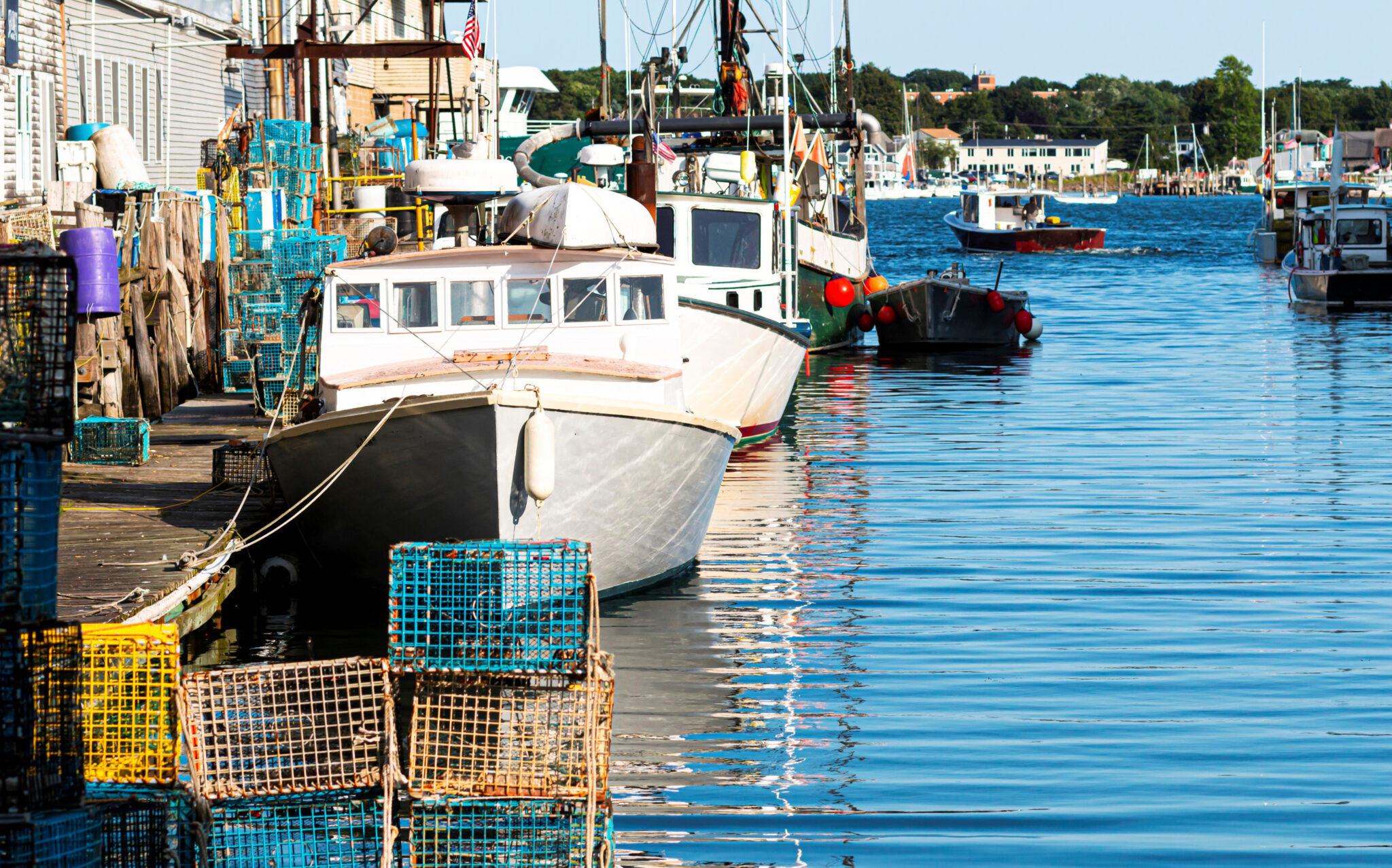
Maine’s lobster fishery is often described in terms of its boats, traps, working waterfronts, and multigenerational fishing families. But the people behind the Maine lobster industry are more diverse than the traditional image of a lobsterman might suggest.
Women have worked on Maine’s waters for generations, and today their influence extends well beyond harvesting. Women are captains, sternmen, association leaders, seafood executives, advocates, researchers, and members of the next generation preparing to enter the fishery. Their numbers remain relatively small, particularly among licensed lobster harvesters, but their contributions to one of Maine’s most important industries are significant.
How Many Women Work in Maine’s Lobster Fishery?
Women are still a minority among Maine lobster license holders.
A peer-reviewed study published in Marine Policy analyzed Maine licensing data and found that women held 4.8% of lobster licenses in 2020. By comparison, women represented 23.4% of shellfish and seaweed aquaculture license holders and 37.8% of kelp license holders. Researchers pointed to factors including access, work flexibility, industry culture, and institutional barriers as reasons for the difference.
License statistics also do not tell the entire story. Women may work as sternmen, help operate family fishing businesses, or work elsewhere in the lobster supply chain without appearing in the number of commercial license holders.
Even the terminology can be surprising to people outside Maine. In Maine’s fishing community, “lobsterman” is commonly used as a gender-neutral term.
Virginia Oliver: Nearly a Century on the Water
Virginia “Ginny” Oliver of Rockland became one of the best-known women in Maine’s lobstering industry. She started fishing as a child and continued working on the water for more than nine decades, eventually becoming known as Maine’s “Lobster Lady.”
Her career is a reminder that women have been part of the Maine lobster industry for generations, even when their work received far less attention.
Genevieve McDonald: Fishing and Industry Leadership
Genevieve McDonald of Stonington became a lobster boat captain and the first woman appointed to Maine’s Lobster Advisory Council. Her career also included work connecting fishermen, science, and industry needs, showing how women are contributing not only on the water but also to fisheries policy and the future of the resource.
Patrice McCarron: Advocating for Maine Lobstermen
Patrice McCarron is president and executive director of the Maine Lobstermen’s Association, one of the state’s leading lobster industry organizations. She has represented Maine lobstermen on issues ranging from fisheries management and federal regulations to whale protection measures and working-waterfront concerns, giving the industry a strong voice in complex policy discussions.
Annie Tselikis: Representing Maine’s Lobster Supply Chain
Annie Tselikis became the first executive director of the Maine Lobster Dealers’ Association in 2014. Her work focuses on the business side of the industry, including wholesale distribution, processing, market access, trade policy, and workforce issues—areas that are critical to getting Maine lobster from the dock to customers around the world.
Passing Maine’s Lobstering Tradition to the Next Generation
Maine lobstering has always relied heavily on knowledge passed between generations. The Maine Lobstermen’s Association’s junior harvester program includes both boys and girls from coastal communities throughout the state, helping to introduce the next generation to the skills and responsibilities of the fishery.
That visibility matters. Young women entering the industry today can look to examples such as Virginia Oliver, Genevieve McDonald, Patrice McCarron, and Annie Tselikis and see multiple paths into Maine’s seafood economy.
The industry is still overwhelmingly male, but the range of examples available to the next generation is wider than it once was.
Why Women’s Contributions Matter to the Maine Lobster Industry
The Maine lobster industry is much larger than the number of people holding traps.
The Maine Lobstermen’s Association estimates that the fishery generates more than $2 billion annually in sales and supply-chain revenue for the regional economy. According to a 2018 Colby College report, more than 12,000 jobs are directly supported by captains and sternmen, while wholesale lobster distribution supports approximately another 5,500 jobs.
Women contribute throughout that system—from catching lobster and running boats to managing seafood businesses, advocating for fishermen, studying marine ecosystems, developing markets, and preparing the next generation to work on Maine’s coast.
Their stories are therefore not a separate chapter of Maine lobstering. They are part of the industry’s larger story.
Frequently Asked Questions
How many women work in the Maine lobster industry?
Exact numbers vary depending on how participation is measured. A peer-reviewed study using 2020 Maine licensing data found that women held 4.8% of lobster licenses. That figure does not necessarily capture women working as sternmen or in seafood processing, distribution, advocacy, research, and other lobster-related businesses.
Who are some notable women in Maine’s lobster industry?
Examples include Virginia Oliver, who lobstered for more than nine decades; Genevieve McDonald, the first woman appointed to Maine’s Lobster Advisory Council; Patrice McCarron, president and executive director of the Maine Lobstermen’s Association; and Annie Tselikis, the first executive director of the Maine Lobster Dealers’ Association.
Are women who catch lobster in Maine called lobstermen?
Often, yes. Within Maine’s fishing culture, “lobsterman” is commonly used as a gender-neutral occupational term, and many women working in the fishery use it to describe themselves.
How are women helping shape the future of Maine seafood?
Women are participating in commercial fishing, fisheries policy, seafood distribution, marine research, advocacy, aquaculture, and working-waterfront businesses. Research also shows considerably higher female participation in Maine’s shellfish and seaweed aquaculture sectors than in the lobster fishery.
Celebrating the People Behind Maine Lobster
Women have helped build, preserve, and advance Maine’s seafood traditions for generations. Today, their influence can be found throughout the Maine lobster industry—on boats, at the wharf, inside seafood businesses, and in the organizations working to protect the future of the fishery.
At Klenda Seafood, we’re proud to be part of an industry built around generations of hardworking Maine people and a seafood tradition recognized around the world.
Explore fresh Maine lobster and seafood from Klenda Seafood and bring a piece of Maine’s working-waterfront tradition to your table.